
The September issue of Wasl focuses on accountability for digital decisions and the conditions needed to make the protection of rights effective in practice. Masaar’s publications examine technology companies’ responsibility for harms that their technical systems contribute to, the limits of relying on SIM registration data as evidence, the rights of platform workers, and the tools lawyers need in cases involving the non-consensual sharing of private content.
At the regional level, 7amleh examines the links between Israel’s surveillance industry and its military and economic structures, as well as restrictions on expressions of solidarity with Palestinians in Europe. SMEX explores how to protect children without turning age verification into another mechanism for collecting personal data, while also examining the privacy risks posed by Meta’s smart glasses. Other publications consider the effectiveness of data protection laws and the impact of prepaid SIM regulation in Lebanon on access to accounts and services linked to phone numbers. Together, these publications examine different aspects of the relationship between the design, regulation, and enforcement of digital systems and their impact on users.
Masaar Publications
Individualized Pricing of Labor Power and Workers’ Right to Compare Pay
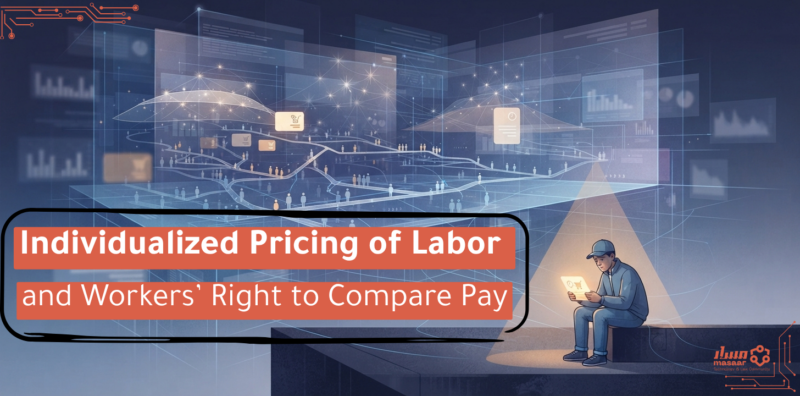
Masaar’s paper examines how digital platforms can use workers’ data and behavior to determine pay and allocate work opportunities, potentially resulting in different pay for workers performing similar tasks. It distinguishes between dynamic pricing, which responds to factors such as time, location, and demand, and individualized pricing, which takes a worker’s characteristics or history into account. Drawing on cases from transportation, delivery, and nursing, including Talabat workers in Cairo, the paper examines the risks created by limited transparency. It proposes safeguards that would allow workers to compare pay, understand differences, and correct or challenge the data used to determine their compensation.
Cyber Extortion and Privacy Violations: Lawyers’ Guide in Cases Involving the Non-Consensual Sharing of Private Images and Content
Masaar’s guide provides lawyers with a practical framework for cases involving the non-consensual sharing of private images, videos, or recordings, which may involve privacy violations, threats, extortion, and defamation. It covers the process from the initial interview with the victim to preserving digital evidence, filing complaints and technical requests, following investigations, and seeking compensation. The guide also explains that consent to being photographed or recorded does not constitute consent to publication, emphasizing the importance of preserving evidence and building a case that can withstand technical and judicial scrutiny.
Decent Work in the Platform Economy Convention: Rights and the Limits of Enforcement
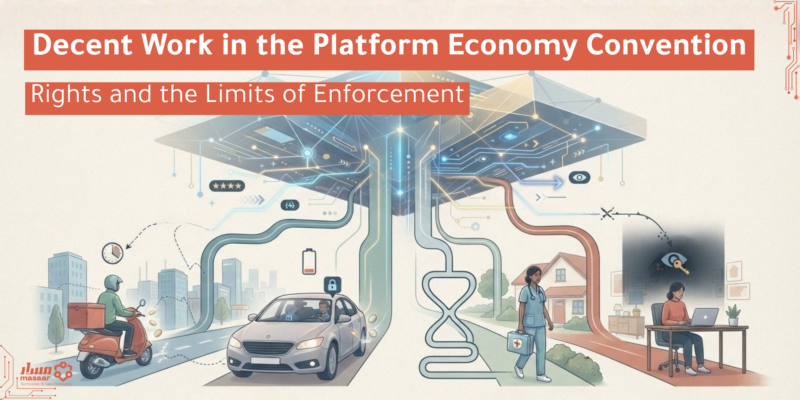
Masaar’s paper examines the Decent Work in the Platform Economy Convention as an important step toward recognizing platform workers within international labor law. It addresses pay, data, automated decision-making, and access to work without automatically classifying every platform worker as an employee. The paper also examines issues left to national law, including employment status, working time and expenses, access to platform data, and responsibility between platforms and intermediaries. In Egypt, the Convention’s impact will depend on whether its principles are translated into enforceable protections for workers.
Substantive Defense Memorandum on Criminal Liability for the Use of Mobile Phone Lines Registered in Other People’s Names
Masaar’s memorandum distinguishes between a person’s name appearing in a telecommunications company’s records and proof that they actually possessed or used the SIM card in connection with a criminal offense. It argues that criminal attribution should rely on evidence of possession, control, and use, as well as the circumstances of the case, rather than treating registration records as conclusive evidence. The memorandum also provides lawyers with guidance on structuring defenses, requesting technical examinations, and challenging digital and telecommunications evidence when registration data is disputed.
Digital Decisions, Tangible Consequences: Tech Companies’ Responsibility for Harm
Masaar’s paper examines technology companies’ responsibility for harm in relation to the degree of control they exercise over digital systems, including their design, data, contractual terms, and relevant records. It distinguishes between a technology’s connection to harm and the establishment of legal liability, while also distinguishing companies’ responsibility to respect human rights from legal liability under applicable law. The paper calls for human rights due diligence throughout the product lifecycle and for responsibility to reflect the actual distribution of power within the service chain.
Joint Statement
Masaar and EIPR Call for Clear Public Safeguards to Protect Children Online and Uphold Their Rights | Link
From the Arab Region
Policy Paper: Protecting Children from Social Media. Are Bans Effective? (SMEX)
SMEX examines approaches to protecting children from harms associated with social media without relying solely on unrestricted access or blanket bans. The paper links these risks to platform design, algorithmic amplification, data collection, and weak corporate accountability. It also warns that mandatory age verification may require users to provide sensitive personal data and proposes an approach combining data protection, platform accountability, digital literacy, support for families, and children’s participation in decisions affecting their digital lives.
Militarized Industrial Policy and Israeli Surveillance Firms (7amleh)
7amleh examines Israel’s surveillance industry as a network connecting military and intelligence institutions with private companies and venture capital. Focusing on Toka Group and Corsight AI, the paper traces how technologies developed in the context of the occupation and control of Palestinians can be commercialized and exported to other markets. It also examines responsibility across the development, investment, contracting, and export of these technologies.
Solidarity Censored: Examining Digital Suppression of Pro-Palestine Support Across Europe (7amleh)
A 7amleh report documents restrictions on expressions of solidarity with Palestinians on digital platforms across several European countries, including content removal, account suspensions, reduced reach, shadow banning, and restrictions on platform features. It examines how platform policies interact with national laws and political and regulatory pressures, as well as problems with automated moderation, transparency, and access to appeals. The report calls for stronger enforcement, effective human review, and greater transparency and accountability in content moderation.