Introduction
Social media platforms provide a broad space for expression and participation in the public sphere. The public sphere, in this context, refers to a space in which individuals’ expressions, in their various forms, can reach large audiences. Until relatively recently, access to the public sphere depended largely on media such as newspapers, radio, television, and literary and non-literary works, as well as on artistic works displayed in museums and public exhibitions. The audiences these forms of expression could reach were constrained to varying degrees by economic, social, cultural, geographic, and linguistic barriers.
The internet has significantly expanded access to the public sphere by enabling billions of people to use social media platforms. These platforms also allow users to produce and share their own forms of expression through a wide range of media and tools.
In principle, such content can potentially reach every other user of the same platform. In practice, however, content produced by an individual user does not reach the platform’s entire user base. Language and cultural differences, among other factors, divide the public sphere on social media into smaller sub-spaces. Platform design and content recommendation systems also help shape the boundaries between these spaces by determining which content users are shown based on factors such as language, geographic location, and shared interests.
This makes it possible to identify digital public spheres associated with particular geographic or cultural communities. An Arabic-language digital sphere, for example, is shaped by a shared language, the ability to understand content produced in that language, and a degree of cultural proximity. An Egyptian digital sphere can likewise be identified through shared cultural references, everyday concerns, and issues that occupy public attention.
This Egyptian digital sphere is formed by the content Egyptians produce and consume on social media platforms and provides a space to discuss issues that matter to them. Issues affecting women occupy a particularly prominent place in these debates compared with many other subjects. In Egypt, as elsewhere, debates concerning women often carry particular sensitivities because gender-related issues are closely connected to individual identity, social roles, and the expectations attached to those roles. In the Egyptian context, these sensitivities are further shaped by overlapping social, cultural, and economic factors that have developed over time.
Social media platforms have provided an especially broad space in Egypt for these sensitivities to become visible, expressed, and contested in ways that may be less readily available in other public spaces. This has contributed to a distinct pattern of debate around issues affecting women.
That pattern is shaped by the interaction between the place of these issues within Egyptian social and cultural norms, the mechanisms through which social media platforms operate, and the ways Egyptians use these platforms. The result is a complex environment in which social, cultural, technological, and institutional factors interact to influence both the direction and the limits of public debate.
This paper examines three main sets of factors that shape debates around issues affecting women on social media platforms in Egypt. The first concerns patterns of social media use in Egypt and how these patterns interact with platform design and operation. The second examines the social, cultural, legal, and other constraints surrounding issues affecting women in Egypt and how they shape the possibilities for broader public discussion. The third focuses on the role of state institutions in addressing issues affecting women and how that role contributes to defining the boundaries of public debate.
The paper also examines three key features of online interaction around these issues. The first is the capacity of certain platform dynamics to reinforce existing biases, alongside the opportunities social media may create for people with differing views to encounter one another. The second concerns advocacy efforts aimed at improving conditions for women in Egypt and advancing gender equality, as well as the anti-feminist, anti-women’s-rights, and broader misogynistic discourse that responds to these efforts. The third examines the use of social media platforms to call on state institutions to intervene in cases involving women and to address different forms of discrimination and violence against them.
Finally, the paper considers both the positive and negative dimensions of online debate around issues affecting women in Egypt and explores how these dynamics may develop as digital technologies continue to change. These developments are likely to affect how people experience social media platforms, as well as how content is produced, distributed, and engaged with, with implications for the nature, direction, and boundaries of debates concerning women.
Dynamics of Social Media Interaction in Egypt
Social media interaction in Egypt is shaped by the interplay between social and cultural factors and the mechanisms through which platforms operate. The first set of factors relates to the characteristics of Egyptian society, its social and cultural composition, and differences in how various social groups are represented and participate on these platforms. Platform-level factors include content recommendation algorithms, which, to varying degrees, influence what users see based on data about their interests and previous interactions, as well as considerations related to promotion and paid advertising.
The characteristics of online content and patterns of user interaction also shape the discussions that take place on these platforms. A significant share of widely circulated content relies on images and short-form video, alongside the reposting of content produced by others, whether for commentary or reuse in different contexts. Platforms also provide rapid forms of engagement, including comments, reactions, and reposts, allowing users to participate in ongoing discussions without producing original content or developing a detailed argument of their own.
These patterns interact with content recommendation systems that, among other factors, rely on user engagement and post circulation. The interaction between the characteristics of Egyptian society, platform mechanisms, and patterns of content production and circulation helps shape the environment in which debates around issues affecting women take place. This environment helps explain several dynamics examined in the following sections, including the reinforcement of existing biases, the spread of discourse supporting or opposing women’s rights, and how particular incidents can develop into issues that attract widespread attention across social media platforms.
Issues Affecting Women in Egypt: The Boundaries of Public Debate
Debates around issues affecting women in Egypt are shaped by social, cultural, religious, and legal factors that influence both the scope of discussion and the language used within it. Patriarchal structures and misogynistic attitudes contribute to shaping some views of women’s roles and rights, while religious references and arguments are also present in a number of these debates. These factors may constrain certain forms of discussion, particularly when specific positions are presented as conflicting with religious rulings or established social norms.
The nature of the debate varies depending on the issue under discussion. Questions relating to women’s participation in the public sphere, including employment, education, and sexual harassment, involve overlapping social and legal considerations and may also include religious arguments. Religious references tend to be more prominent in debates concerning marriage and family relations, where aspects of Egypt’s personal status legislation are linked to principles of Islamic Sharia. This can be seen in discussions around issues such as khul‘ divorce and financial support, and domestic violence. In these debates, religious opinions and the positions of institutions such as Egypt’s Dar al-Ifta are invoked in support of different viewpoints, while some participants challenge those opinions or their application to particular cases.
These constraints also shape discussions on social media platforms. Participants, particularly women’s rights defenders, may be stigmatized as acting against religion or accused of violating the law. Such attacks may be accompanied by verbal abuse or threats to individuals’ safety and security. Understanding these constraints helps explain some of the polarization and digital violence that characterize online interactions around issues affecting women, which the following sections examine in detail.
The Role of State Institutions in Addressing Issues Affecting Women in Egypt
The role of state institutions in addressing issues affecting women in Egypt extends beyond legislation. It also includes policies and practices implemented in everyday life, as well as the discourse these institutions communicate through different channels. Social media platforms have become spaces where state institutions exercise some of these roles, with implications for the direction and boundaries of online debate on issues affecting women.
A range of institutions intervene in matters concerning women’s position in society and the family. Some have mandates that directly address women’s issues, such as the National Council for Women. Others, such as the National Council for Childhood and Motherhood, have mandates focused on motherhood and childhood, reflecting the persistence of traditional conceptions that associate women’s roles with childcare responsibilities.
Security authorities also intervene in matters affecting women, whether in relation to conduct that is criminalized by law, such as sexual harassment and violence against women, or conduct that is arbitrarily brought within the scope of punitive legal provisions. The latter includes measures aimed at regulating women’s behavior in public spaces according to conservative moral standards, with differences in how such measures are applied across social groups. One example is the arrest of female content creators on TikTok on charges of “violating Egyptian family values.”
These roles contribute to shaping the boundaries of debate around issues affecting women in Egypt. This is reflected in official discourse that reinforces traditional roles for women as wives, mothers, and homemakers, as well as in measures aimed at regulating women’s behavior in public spaces, which are applied unevenly across social classes. The presence and practices of state institutions in these forms influence the nature of debate around issues affecting women, including discussions taking place on social media platforms.
Characteristics of Online Interaction Around Issues Affecting Women
This section examines patterns of interaction around issues affecting women on social media platforms in Egypt through a number of illustrative examples. It also considers how certain platform features shape these interactions, the presence of state institutions in the social media environment, and how different actors engage with that presence using the tools provided by the platforms.
Reinforcing Biases and the Potential for Bridging Differences
Content recommendation mechanisms influence the types of material users encounter and may reinforce existing biases while reducing exposure to differing perspectives. This dynamic is associated with the phenomenon of “echo chambers,” digital environments in which users are repeatedly exposed to views and content that align with their existing positions, while opportunities to encounter different perspectives become more limited, which may further reinforce existing biases. Content recommendation algorithms rely, among other factors, on preferences inferred from users’ previous interactions. Repeated engagement with anti-feminist content, for example, may therefore result in users being shown more similar content.
The effects of these dynamics can also be seen in groups that form around particular positions on issues affecting women in general or on specific issues. At the same time, spaces that bring together people with differing positions and allow for meaningful discussion between them appear to be relatively limited.
Some discussions may also involve highly confrontational language and characterizations. Posts produced by one side can then be reused to reinforce hostile attitudes among those on the other side. More confrontational content may also have a greater chance of circulating widely when it attracts higher levels of engagement, depending on the recommendation and content-ranking mechanisms used by platforms.
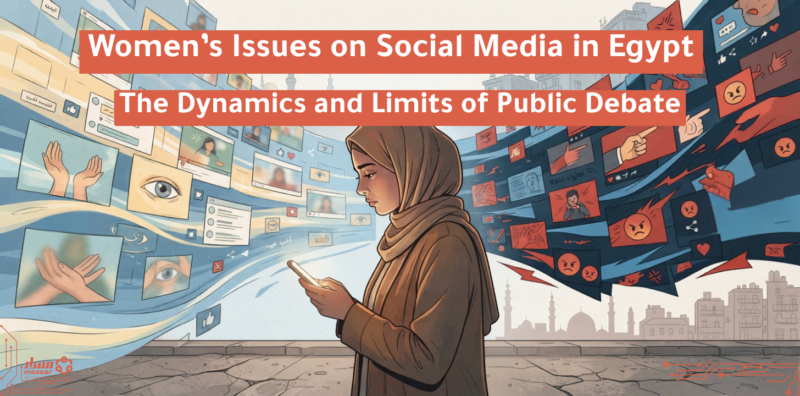
Platform algorithms may also struggle to interpret the intended meaning of certain forms of engagement, since a reaction does not always accurately reflect a user’s position toward the content itself. For example, a large number of “Angry” reactions can reduce the likelihood that a post will be recommended and may limit its visibility, even when users intend to express anger at the incident described in the post rather than at the post itself. The “Haha” reaction is also sometimes used to mock a post or the person who published it. Deliberately flooding a post with mocking reactions may amount to a form of psychological abuse, depending on the nature of the content and the context in which it was published. This behavior is particularly visible in responses to posts concerning sexual harassment or violence against women.
Social media platforms also enable hostile forms of engagement that require very little time or effort from users. This may encourage rapid and superficial reactions to content and reduce opportunities for more substantive discussion between people holding different positions, potentially reinforcing existing biases between them.
Advocacy Efforts and Counter-Discourse
Feminist organizations and groups, alongside independent feminist activists, use social media platforms as a primary—and sometimes their only—means of bringing issues affecting women in Egypt into public discussion. Some feminist organizations and groups rely on organized advocacy campaigns around specific issues, including calls to amend Egypt’s personal status law and efforts to address sexual harassment in public spaces.
Independent feminist activists, by contrast, often address issues affecting women through recurring incidents, such as cases in which women are killed by husbands, fathers, or other family members. Activists use these incidents to draw attention to increasing violence against women, to forms of social protection that some men may benefit from when committing violence against women within their families, and to what is perceived as leniency in some judicial rulings concerning perpetrators of violence against women when the perpetrators are family members.
The social media activity of institutional feminist organizations appears to be less flexible in the formats and tools it uses than that of independent activists. Independent activists tend to make greater use of formats that can expand the reach of their content, including video. This allows them to publish on platforms where video is a central format, such as TikTok, as well as on other platforms where video has become increasingly prominent, including Instagram and Facebook. Their ability to respond quickly to new developments also enables them to publish more frequently, potentially increasing the reach and impact of their content.
Social media platforms have also provided space for the formation of anti-feminist groups. These groups operate through dedicated pages. Some attack feminism in general, while others target particular groups of women, and some focus on specific contested issues, such as child custody rights and opposition to a wife’s right to obtain a divorce through khul‘.
These pages comment on everyday incidents related to the issues they focus on. They also closely follow posts by feminist activists, feminist organizations, and institutions concerned with issues affecting women, such as the National Council for Women, as well as positions taken by official and religious bodies, including Egypt’s Dar al-Ifta and Al-Azhar. Some of these pages use ridicule, while the discourse they publish may extend to insults, accusations, and other forms of verbal abuse.
Individuals holding anti-feminist or broadly misogynistic views also engage through their personal accounts, either by publishing their own content or, more frequently, by closely following and extensively commenting on posts by feminist activists, feminist organizations, and others. Some employ the same tactics described above, including ridicule, disparagement, and verbal abuse.
Calling on State Institutions to Intervene
The growing presence of state institutions on social media platforms, through official pages and the allocation of staff to monitor content published on these platforms for a range of purposes, has encouraged some users to treat social media as a rapid means of drawing institutions’ attention to specific incidents and calling on them to respond. This is reinforced by the increasing use of smartphones by citizens to record videos documenting incidents that may constitute crimes or serious violations, whether affecting themselves or others, and to publish those videos on social media platforms.
In Egypt, publishing information about such incidents on social media has become a means of putting pressure on state institutions to take action. Those concerned with particular incidents may seek to expand their reach by increasing the volume of posts, using hashtags, and combining different media formats to reach larger audiences. The Ministry of Interior is among the state institutions most actively engaged in monitoring content published on social media and taking action in response to some incidents that gain significant visibility on these platforms.
Among the incidents affecting women that most frequently prompt calls for state intervention are cases of sexual harassment and violence against women in public spaces and on public transportation, as well as violence within the home. Many women who experience such incidents prefer to draw the relevant institution’s attention to them through social media rather than rely on conventional reporting channels, such as filing a report at a police station or calling the police emergency service. This preference is largely linked to widespread mistrust that reports submitted through ordinary procedures will receive adequate attention, as well as concerns that the way a complaint is handled may undermine the survivor’s rights or expose them to further risk.
State institutions’ monitoring of content published on social media can have different implications for women’s rights. One form of such monitoring is the prosecution of female content creators, particularly on TikTok, on charges including “violating Egyptian family values,” based on conservative assessments of their clothing and behavior. As the number of girls and women facing such charges has increased, these prosecutions have become an issue of concern within the broader context of women’s rights in Egypt. Their enforcement also reflects a class dimension, as different social groups are not targeted in the same way by these measures.
Publishing information about incidents affecting women can also turn an individual case into an issue of broad public concern. This may prompt institutions to respond more quickly and take action, but it may also expose women who have experienced abuse to attacks by other users. Such attacks can include tracking down complainants’ social media accounts and searching through their personal content for material that can be used to damage their reputation, drawing on conservative social judgments concerning women’s behavior and respectability.
Positive and Negative Aspects and Future Trends
Positive Aspects
Social media platforms provide a shared space in which people holding different positions can encounter one another’s views. Despite the limitations and barriers discussed in previous sections, these platforms still offer some possibility for narrowing differences between individuals with opposing views on issues affecting women. They also allow people from different social groups to participate in public discussion, creating opportunities for interaction between those with differing or conflicting perspectives, even if such opportunities remain limited.
Social media platforms also bring together individuals, groups, and organizations concerned with issues affecting women in Egypt, alongside state institutions whose mandates are relevant to these issues. This creates possibilities for direct or indirect communication with those institutions. The same space can also be used to influence institutional positions on particular issues affecting women, whether by pressing institutions to devote greater attention to those issues or by calling for changes in relevant policies or practices.
Previous cases indicate that this type of influence can be achieved to varying degrees. One example involved a woman who obtained a court ruling finding a hotel management responsible for discrimination after it refused to accommodate her without a male companion. Publicizing the incident on social media and the widespread engagement it generated helped draw attention to the case and supported its progression into judicial proceedings.
Negative Aspects
Negative aspects include the reinforcement of existing biases, the intensification of digital violence against women, the reproduction of gender stereotypes, and support for some conservative or anti-women’s-rights positions. Social media may also be used to pressure state institutions to adopt positions that could negatively affect women’s rights or undermine existing gains.
Mechanisms such as echo chambers can deepen existing biases and reduce opportunities for engagement between people holding different positions on issues affecting women. In some cases, interaction may become dominated by ridicule and mutual insults rather than substantive discussion of the issues themselves. This environment may contribute to increased digital violence against women on social media platforms in Egypt and to the reproduction of stereotypes that demean women or portray them negatively.
Calls for state intervention through social media may also be used in different directions. While women’s rights defenders may welcome intervention by security authorities in cases of sexual harassment and violence against women, those promoting anti-women discourse may support measures taken by the same authorities to regulate women’s behavior. Some may also seek to draw the attention of security institutions to content posted online in order to prompt legal action against women on the basis of their behavior or clothing.
Future Trends: Opportunities and Risks
Social media platforms have undergone successive changes in their features and patterns of use since they first emerged. Some of these changes are linked to developments in digital technology, which continue to influence platform design, available tools, and the mechanisms through which content is distributed.
Faster internet connections and broader access have contributed to the growing prominence of visual content and video relative to text-based content. The development of earlier generations of artificial intelligence algorithms also led to their widespread use in content recommendation and in collecting data about users’ preferences and interests. These changes have altered the experience of using social media compared with several years ago and have also affected the extent to which these platforms can function as spaces for public discussion.
A more recent development is the spread of generative artificial intelligence models and their integration into tools available to users, whether within social media platforms themselves or through external services and applications. This has been accompanied by a growing volume of social media content produced or assisted by generative AI systems.
AI models can be used to create new forms of individual and collective expression and to support awareness-raising and advocacy campaigns promoting women’s rights and gender equality. Some forms of AI-assisted content may help reach wider audiences, increasing the likelihood that rights-based messages will reach users who would not otherwise encounter them and potentially reducing some of the isolation between different sides of debates around issues affecting women in Egypt.
Generative AI may also be used in ways that reinforce existing biases. These models create additional opportunities for misuse, particularly in defamation and the dissemination of false information. Such practices are already present in disputes surrounding issues affecting women and may create particular risks in the Egyptian social context. Rumors or synthetic content concerning women’s personal conduct or perceived morality may expose them to harassment, abuse, or other forms of violence.
AI technologies may also be used in content moderation to detect and limit some forms of digital gender-based violence and defamatory content on social media platforms. If such systems are implemented effectively and accurately, they may help reduce abusive and violent content, creating more space for substantive discussion of issues affecting women and lowering some of the barriers that currently restrict meaningful participation by different groups.