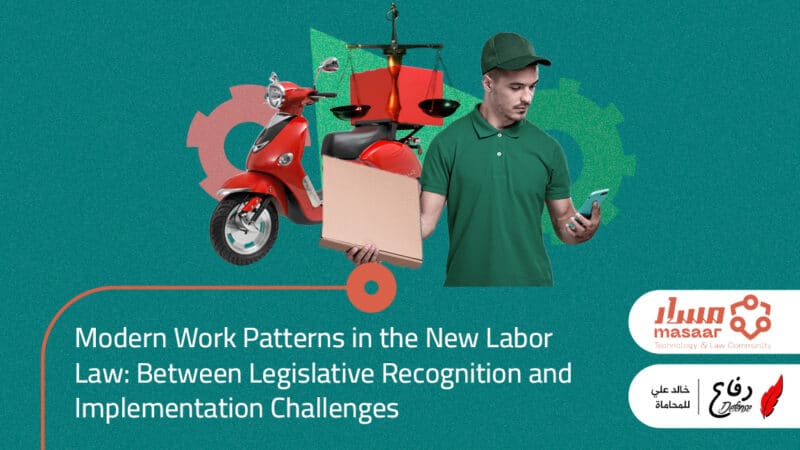
Modern Work Patterns in the New Labor Law: Between Legislative Recognition and Implementation Challenges

This paper provides a critical analysis of how platform workers are positioned within the new Labor Law, highlighting shortcomings that may leave them vulnerable. It also presents practical proposals to bridge these gaps, ensuring the protection of workers’ fundamental rights in the context of an accelerating digital economy.

Modern Work Patterns in the New Labor Law: Between Legislative Recognition and Implementation Challenges Read More »

Rethinking Cybercrime: New Crimes or New Technologies for Old Crimes?

This paper seeks to engage with the ongoing debate surrounding the concept of ‘cybercrime’. It presents arguments in favor of establishing a distinct classification termed “cybercrime”, as well as the counterarguments asserting that crime, in its essence, remains constant, with technology serving merely as a new instrument for the commission of traditional offenses.

Rethinking Cybercrime: New Crimes or New Technologies for Old Crimes? Read More »

The Right to Use Radio Spectrum in Egypt: Towards Equitable Digital Governance of a Scarce Resource

This paper examines the legal and institutional framework governing spectrum management in Egypt, assessing its alignment with principles of digital justice and human rights. The study grounds its analysis in conceptualizing spectrum access rights as an extension of freedom of expression and communication. It highlights the state’s central regulatory role over this resource and its implications for media pluralism and community-led initiatives.

The Right to Use Radio Spectrum in Egypt: Towards Equitable Digital Governance of a Scarce Resource Read More »

Sectoral Governance of AI as an Alternative to a Comprehensive Law in Egypt

This paper offers an alternative vision for addressing the challenges of AI. Its goal is to protect citizens’ fundamental rights from the risks of exploitation and discrimination, while encouraging responsible local innovation without excessive legislative burdens. It also seeks to bridge institutional gaps through flexible regulatory tools that can be continuously updated, ensuring a practical response to rapid technological change while respecting human rights.

Sectoral Governance of AI as an Alternative to a Comprehensive Law in Egypt Read More »

Powers and Oversight in the Digital Space: The Crime of Operating a Website without a License and the Authority of the Supreme Council for Media Regulation

The crime of “operating a website without a license” presents a set of complex legal and constitutional challenges in Egypt. Since the introduction of the Press and Media Regulation Law, the licensing requirement has been increasingly applied to a broad range of websites, often extending beyond the explicit scope defined by the law and the Constitution. This paper offers a critical legal analysis of this expanding regulatory framework.

Powers and Oversight in the Digital Space: The Crime of Operating a Website without a License and the Authority of the Supreme Council for Media Regulation Read More »

AI and Democracy: How is Decision-Making Being Reshaped?

The landscape of the relationship between the various uses of AI and the democratic decision-making process is immensely broad and complex. Therefore, this paper discussing the long-standing relationship between the use of information in decision-making processes and how this process expresses popular will, drawing a line intersected by numerous AI applications.

AI and Democracy: How is Decision-Making Being Reshaped? Read More »

Between Ambition and Implementation: A Critical Reading of Egypt’s E-Government Experience

This paper examines the evolution of the e-government landscape in Egypt by reviewing its various facets, with a specific focus on the rights-based aspect. It discusses the concept of e-government and its roles in improving service delivery and addressing the challenges facing the government service sector.

Between Ambition and Implementation: A Critical Reading of Egypt’s E-Government Experience Read More »

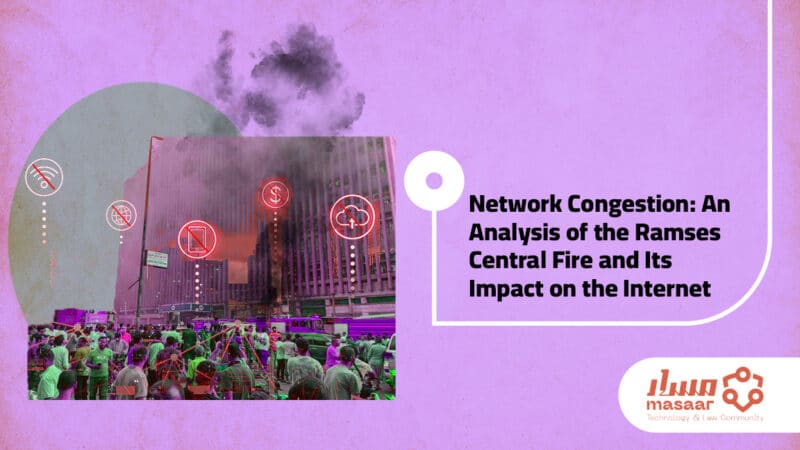
Network Congestion: An Analysis of the Ramses Central Fire and Its Impact on the Internet

This paper provides a technical overview and analysis of the internet outage that occurred in Egypt on July 7, 2025, with a focus on its timing, scope, and impact on the network infrastructure. It draws on data recorded between Monday, 7 July 2025, and Tuesday, 8 July 2025, up to 2:00 p.m. Cairo time.

Network Congestion: An Analysis of the Ramses Central Fire and Its Impact on the Internet Read More »