
This page is updated periodically
This timeline provides an overview for the most important Internet censorship events from 2010 to date. It focuses on the measures and decisions taken by the Egyptian authorities to control the Internet or prevent its users from communicating with each other through attempts to block instant messaging applications such as Signal and Wire. The timeline also presents the most important legislative developments related to the Internet and cases heard by Administrative Courts, including the blocking YouTube case and the case of cutting off communications. In addition, the timeline lists the events of Internet censorship that coincided with demonstrations in Egypt (e.g., the demonstrations of 20 September 2019).
Since the beginning of the second decade of the 2000s, and with the increase in the number of Internet users in Egypt and the consequent expansion in publishing political content critical to the authorities, through blogs and social media websites, the Egyptian authorities began to strengthen its control of the content posted on the virtual space.
In January 2011, the authorities blocked Facebook and Twitter after calls for demonstrations at Tahrir Square on 25 January 201. Blocking websites at that time was not a usual practice by the authorities, but the most prominent event of that year was the cutting of Internet and communications services all over Egypt on 28 January. Since then, the state has paid special attention to the Internet, starting by blocking websites in a systematic manner, which was followed by introducing laws to legalize the practice of blocking, such as the Anti-Cybercrime Law and the Press and Media Regulation Law.
It is only a shortcode builder. Kindly update/publish the page and check the actually cool timeline on front-end
Cool Timeline

أصدر المجلس القومي لتنظيم الاتصالات قرارًا في 13 مارس 2010 بمنع إجراء المكالمات باستخدام الإنترنت الخاص بالموبايل، والمودم على شبكات “موبينيل، فودافون واتصالات“، وكان المنع في 2010 موجهًا بالأساس ضد تطبيق سكايب (Skype) للمحادثات، وبالرغم من أن قرار المنع صدر في عام 2010، فإن منع خدمات الVoIP ما زال قائمًا في مصر فلا يمكن استخدام شبكات الإنترنت المحمولة لإجراء محادثات على “سكايب“، أو تطبيق التراسل الفوري الشهير “واتس آب“.
The National Telecommunication Regulatory Authority (NTRA) issued a decree on 13 March 2010 banning clients of Mobinil, Vodafone, and Itisalat from making telephone calls using modems or mobile internet. The ban was basically directed against Skype application, and even though it was decreed in 2010, yet the restriction on VoIP services is still binding until now. Hence, it is not possible until this very moment to use mobile networks to make calls on Skype or WhatsApp.
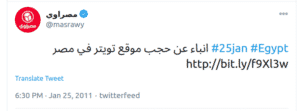
عقب الدعوة إلى التظاهر في ميدان التحرير بالتزامن مع عيد الشرطة يوم 25 يناير 2011 ضد عنف وزارة الداخلية وسوء الأحوال الاقتصادية وتقييد حرية التعبير، قامت حكومة الرئيس الأسبق حسني مبارك بحجب موقع التواصل الاجتماعي “تويتر” وموقع مشاركة الفيديوهات “بامبوزر” يوم 25 يناير 2011 بعد أن اعتمد عليهم العديد من المتظاهرين في نشر أخبار ومقاطع مصورة عن المظاهرات باستخدام الهشتاج الشهير #Jan25 على موقع تويتر. نشر المسؤولون عن موقعي “تويتر” و“بامبوزر” تغريدات أكدوا فيها تعرض خدماتهم للحجب في مصر، في محاولة من الحكومة للسيطرة على نشر الأخبار عن المظاهرات. كما حجبت السلطات بعض المواقع الإخبارية التي قامت بتغطية المظاهرات مثل: موقع الدستور وموقع البديل، وتوقفت شركات المحمول عن تقديم خدمات الإنترنت في محيط ميدان التحرير.
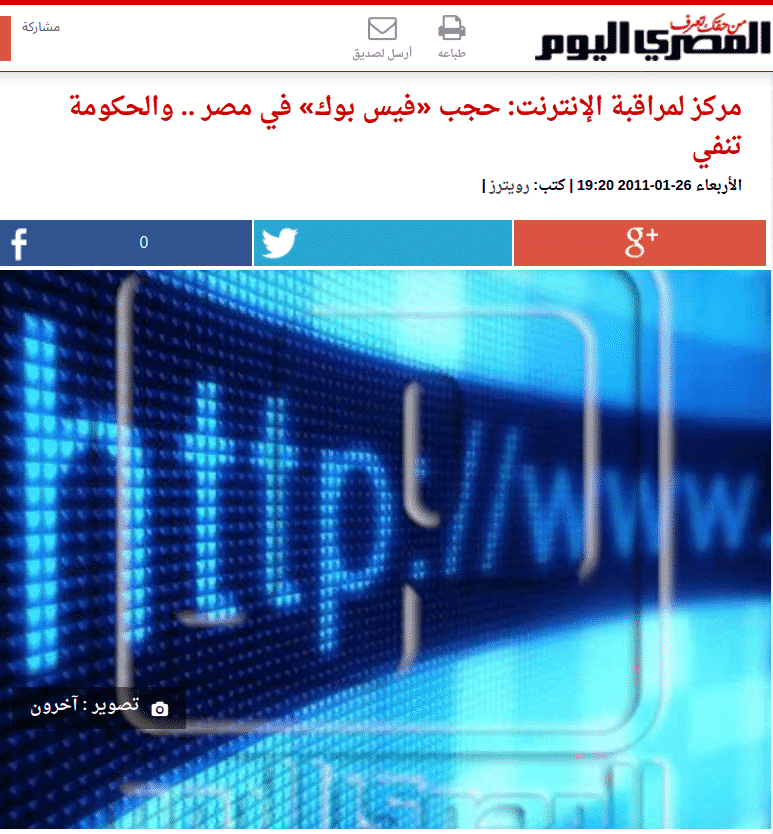
في اليوم التالي للمظاهرات، 26 يناير 2011، تعرض أيضًا موقع التواصل الاجتماعي فيسبوك للحجب في مصر لفترة زمنية محدودة قبل أن يتم رفع الحجب ويعود للعمل مرة أخرى.
On the next day -26 January 2011- Facebook was blocked for a short period of time.
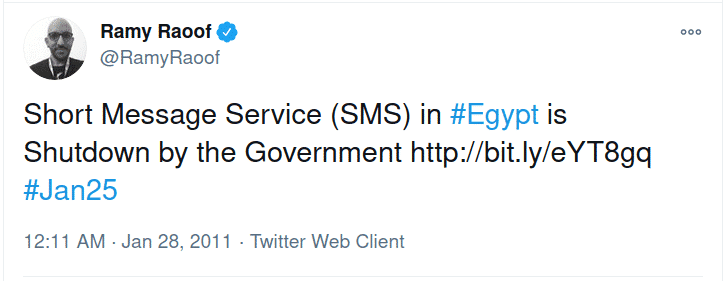
On 27 January 2011, the Egyptian government disabled the mobile telephones SMS service. Nobody was able to send or receive SMSs. The ban lasted until 5 February 2011.

After the relative success of the 25 January 2011 demonstrations, the Egyptian political forces called for a protest on Friday 28 January (known as the Friday of Anger). The government responded by ordering the internet service providers to disconnect the internet service for all users in Egypt. The ban covered: TE Data, Vodafone, Link DSL and Itisalat Egypt for both DSL and mobile internet. The network that was left to work was Noor, then it was disconnected on 31 January. The ban continued until 2 February 2011.
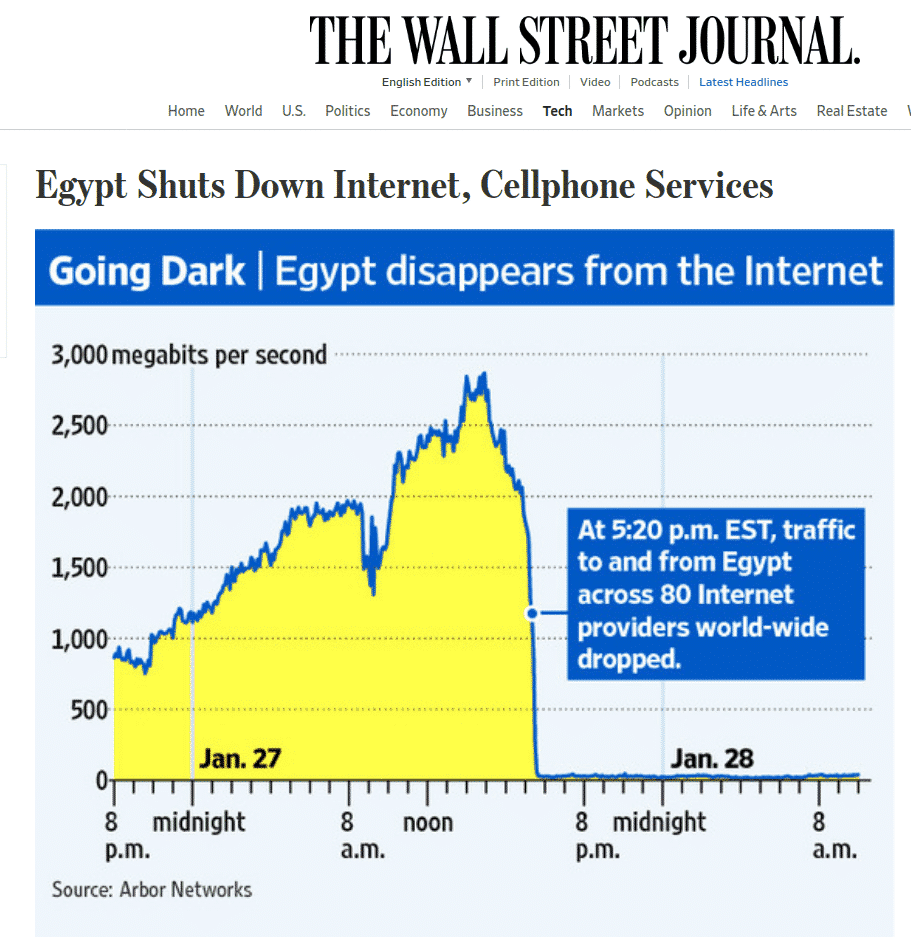
In conjunction with internet disconnection on Friday 28 January, mobile telephone communications in general were banned. The ban included Mobinil, Vodafone, and Itisalat all over the country. The ban order was given by Habib al-Adli, the minister of interior at that time, after an urgent meeting between the three security agencies: state security, general intelligence, and military intelligence (Al-Adli himself testified to this during his trial in the case known as “the breaking out of prisons”.
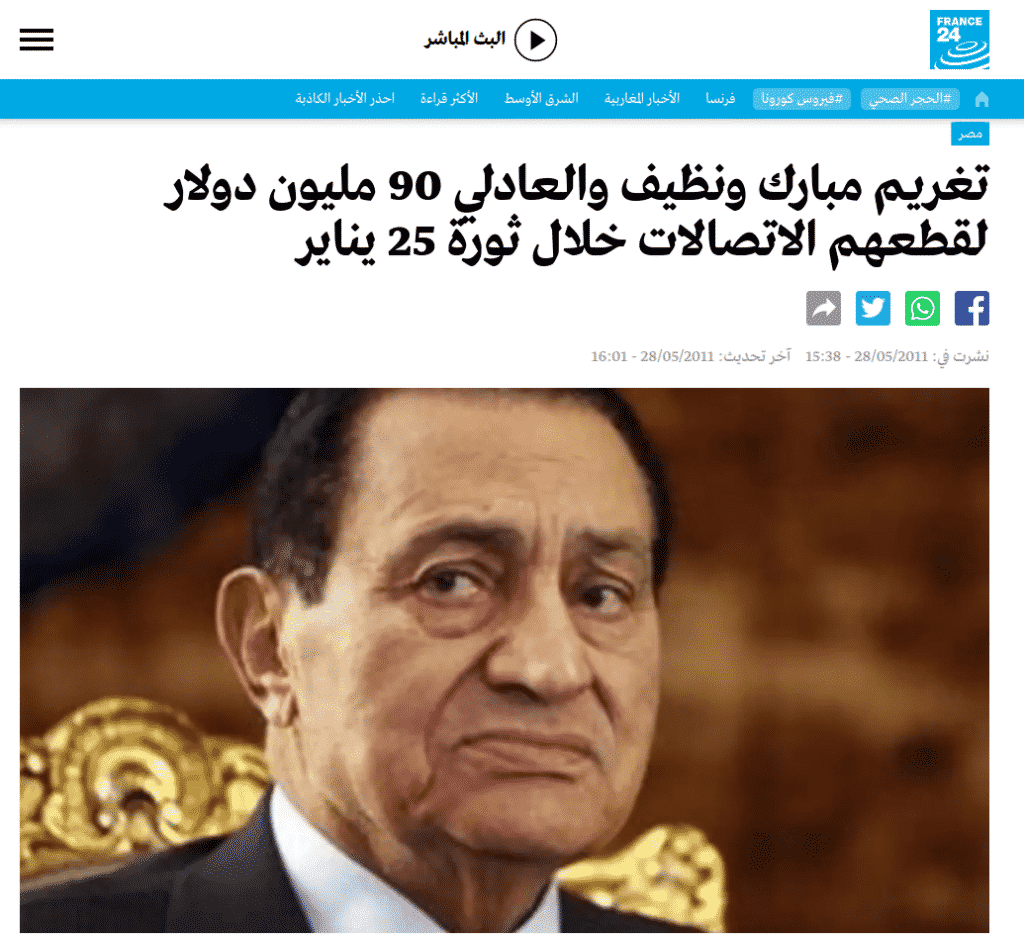
قضت محكمة القضاء الإداري في 28 مايو 2011، بتغريم كلٍّ من الرئيس الأسبق حسني مبارك، ورئيس الوزراء الأسبق أحمد نظيف، ووزير الداخلية الأسبق حبيب العادلي 540 مليون جنيه مصري من أموالهم الشخصية كتعويض عن الأضرار التي خلَّفها قرارهم بقطع خدمات الإنترنت والاتصالات يوم 28 يناير 2011. وجاء في حيثيات الحكم: “إن قرار قطع الاتصالات وخدمات الإنترنت لم يستهدف حماية الأمن القومى، وإنما لحماية النظام والحفاظ على مبارك رئيسًا للجمهورية الحاكم للنظام، حيث لم تكن هناك ثمة حالة تدعو للمساس بالأمن القومى، وتتطلب حماية ذلك الأمن لإصدار ذلك القرار، بل كانت حالة من حالات التعبير السلمي عن الرأي، اجتمع عليها الشعب المصرى الأعزل، طالبت بالعيش والحرية والديمقراطية والعدالة الاجتماعية وضرورة إسقاط النظام القمعي المتسبب فى الإفقار وتكبيل الحريات والنهب المنظم لثروات مصر“. في عام 2018ألغت المحكمة الإدارية العليا الحكم الصادر عن القضاء الإداري.
On 28 May 2011, the administrative court fined former President Hosni Mubarak, former PM Ahmed Nazif, and former Minister of Interior Habib al-Adli EGP 340 million as a compensation to users who were adversely affected by the 28 January decision to cut off the internet and telephone calls. The court ruling said: “the decision to cut off communications and internet services did not aim at protecting national security, but at protecting the regime and its head. There was nothing endangering national security; nothing necessitated taking the decision to cut off communications. These were peaceful expressions of opinion by unarmed Egyptian people, calling for freedom, bread, democracy, and social justice”. (the Supreme Administrative Court cancelled this court ruling in 2018).
Lawyer Muhammad Hamed Salem filed lawsuit number (60693/66) on 18 September 2012 to block YouTube in Egypt, because it screened a movie insulting Prophet Muhammad (according to Salem). Salem contested NTRA’s passive decision not to block YouTube, the links showing the movie, and any other movie that insult Islam.
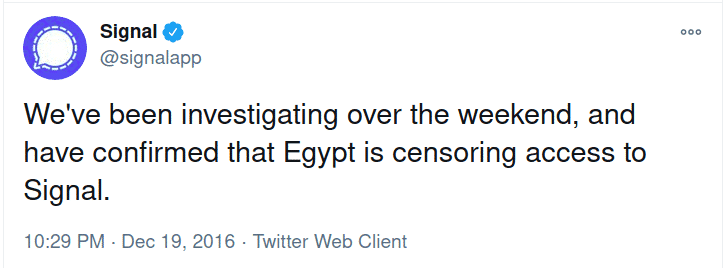
On 19 December 2016, the Egyptian authorities tried to block Signal application. Users subscribing to different networks suffered some difficulties in sending and receiving messages through the application that uses end-to-end encryption. The official Twitter account of Signal said, “we have confirmed that Egypt is censoring access to Signal”.
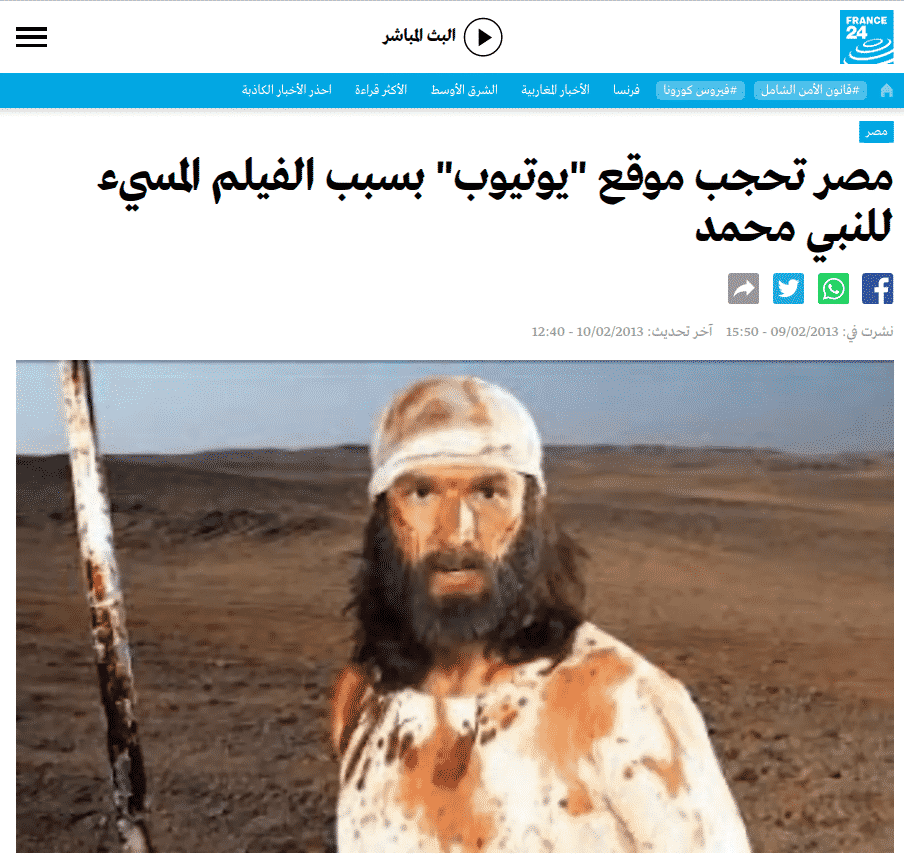
قضت محكمة القضاء الإداري في جلسة 9 فبراير 2013بحجب موقع يوتيوب لمدة شهر و“حجب وحظر جميع المواقع والروابط الإلكترونية على الإنترنت التي تعرض مقاطع الفيلم المسيء للرسول“. وجاء في الحكم: “إن الإبقاء على هذه المواقع وعدم حجبها يهدر القيم“، وأنه “لا يمكن أن يدور ذلك في فلك حرية التعبير لأن ما يعرض على هذه المواقع يعد من أبرز صور الإخلال بالمصالح العليا للدولة والأمن القومي الاجتماعي“. في عام 2018 أيدت المحكمة الإدارية العليا حكم محكمة القضاء الإداري بحجب موقع يوتيوب لمدة شهر.
On 9 February 2013, Egypt’s administrative court blocked YouTube for a month and blocked all links of the movie insulting the prophet. The ruling said: “this is not freedom of expression. What is being screened represents one of the gravest forms of endangering the country’s interests and social national security”. (In 2018, the Supreme Administrative Court approved this court ruling).
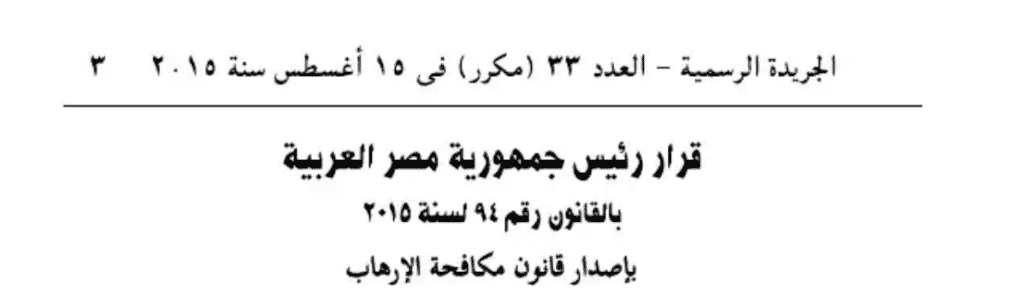
في 15 أغسطس 2015 أصدر رئيس الجمهورية عبد الفتاح السيسي القرار بقانون رقم 94 لسنة 2015 بإصدار قانون مكافحة الإرهاب. ويسمح القانون للنيابة العامة أو سلطة التحقيق المختصة في جريمة إرهابية أن تأذن بأمر مسبب لمدة لا تزيد على ثلاثين يومًا، بمراقبة وتسجيل المحادثات والرسائل التي ترد على وسائل الاتصال السلكية واللاسلكية وغيرها من وسائل الاتصال الحديثة، وتسجيل وتصوير ما يجري في الأماكن الخاصة أو عبر شبكات الاتصال أو المعلومات أو المواقع الإلكترونية وما يدون فيها، وضبط المكاتبات والرسائل العادية أو الإلكترونية والمطبوعات والطرود والبرقيات بجميع أنواعها. كما يمكن للنيابة العامة أو سلطة التحقيق وقف أو حجب المواقع التي أنشئت بغرض بث ما يهدف إلى تضليل السلطات الأمنية أو التأثير على سير العدالة في شأن أية جريمة إرهابية.
On 15 August 2015, President Abdel-Fattah al-Sisi issued a decree ratifying law number 94 for the year 2015: The anti-terrorism law. This law allows the public prosecutor (or the investigations authority), if dealing with a terrorist crime, to order (in a reasoned decree) censoring and recording communications and calls, recording and videotaping private meetings and what goes on the internet, confiscating letters, printed materials, parcels, and telegrams in all their forms. The prosecution also has the right to block websites that publish misleading material that aim at deceiving justice.

Al-Arabi al-Jadid news website was blocked on 30 December 2015 (it was blocked at the same time in both Saudi Arabi and the United Arab Emirates).
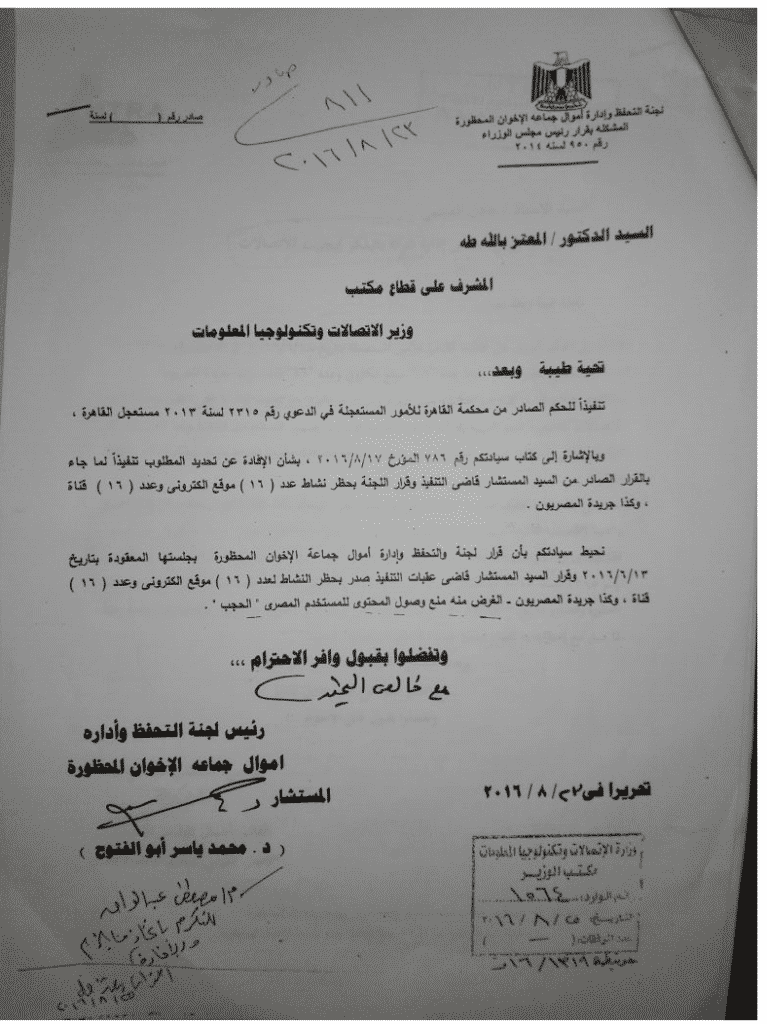
أصدرت لجنة التحفظ وإدارة أموال جماعة الإخوان المسلمين قرارًا في 13 يونيو 2016، في إحدى جلسات القضية رقم 2315 لسنة 2013، “بحظر النشاط لعدد 16موقعًا إلكترونيًّا، وعدد 16 قناة إعلامية، وكذا “جريدة المصريون“، وأكدت اللجنة أن الغرض من القرار هو “منع وصول المحتوى للمستخدم المصري“، من المواقع التي شملها قرار الحجب “الموقع الرسمي لجماعة الإخوان المسلمين، “الشرق “، “نافذة مصر“، “رصد، وكلمتي“، وجميعها مواقع إخبارية. كما نص القرار على حجب عدد من القنوات ومن بينها قنوات: “الشرق“، “مكملين” و“الثورة” على كلٍّ من فيسبوك ويويتيوب والموقع الخاص بالقنوات.
The Muslim Brotherhood Financial Assets’ Confiscation and Administration Committee decreed on 13 June 2016 the blocking of 16 website, and 16 media channels. The Committee said that the aim behind the decree was to “prevent their content reaching the Egyptian user”. Among the websites included in the ban are the official website of the Muslim Brotherhood, Al-Shark, Egypt Window, Rassd, Kalimati (all news websites). The decree also ordered blocking of a number of media channels on Facebook, YouTube, and the channels’ websites (these were Al-Shark, Mekamileen, Al-Thawra).
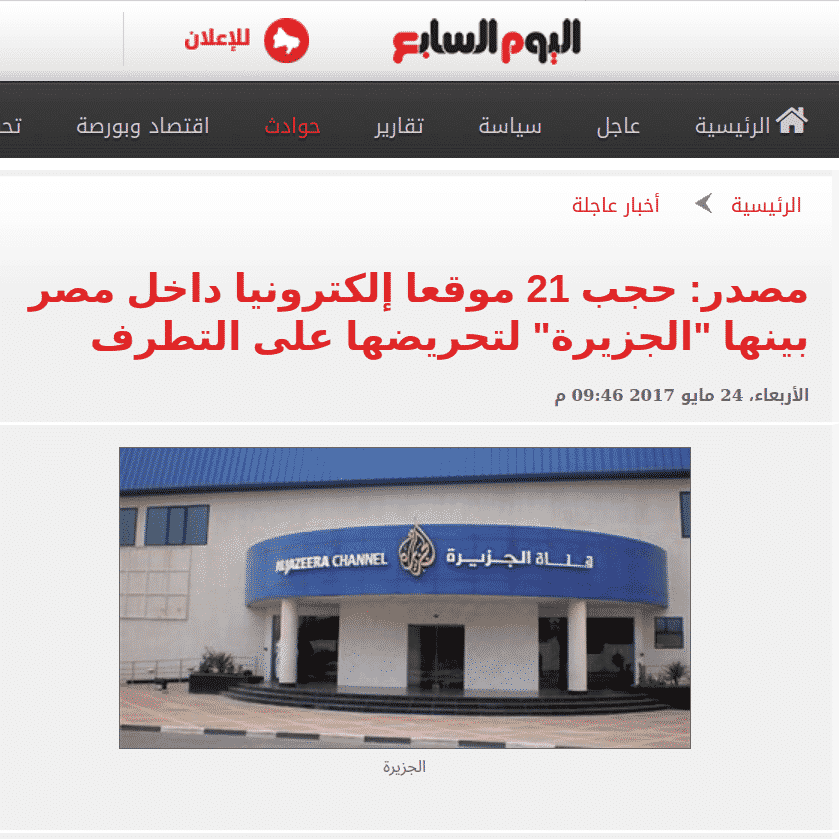
في 24 مايو 2017، فوجئ مستخدمو الإنترنت في مصر بتعرض21 موقعًا للحجب، حيث تعرضت مواقع: “الجزيرة“، “رصد“، “العرب القطرية“، “بوابة القاهرة” و“مدى مصر” للحجب. وأعلنت وكالة “أنباء الشرق الأوسط” الصحفية في نفس اليوم عن حجب 21 موقعًا، نقلًا عن ما أسمته الوكالة: “مصدر أمني رفيع المستوى“، بزعم أن المواقع تتضمن محتوًى يدعم الإرهاب والتطرف وتتعمد نشر الأكاذيب، ولكن لم يعلن هذا المصدر عن الجهة صاحبة القرار. في اليوم التالي نشرت جريدة المصري اليوم تقريرًا من جهة سيادية يعرض تجارب حجب مواقع وِب في دول عربية وأجنبية بهدف تبرير الحجب في مصر.
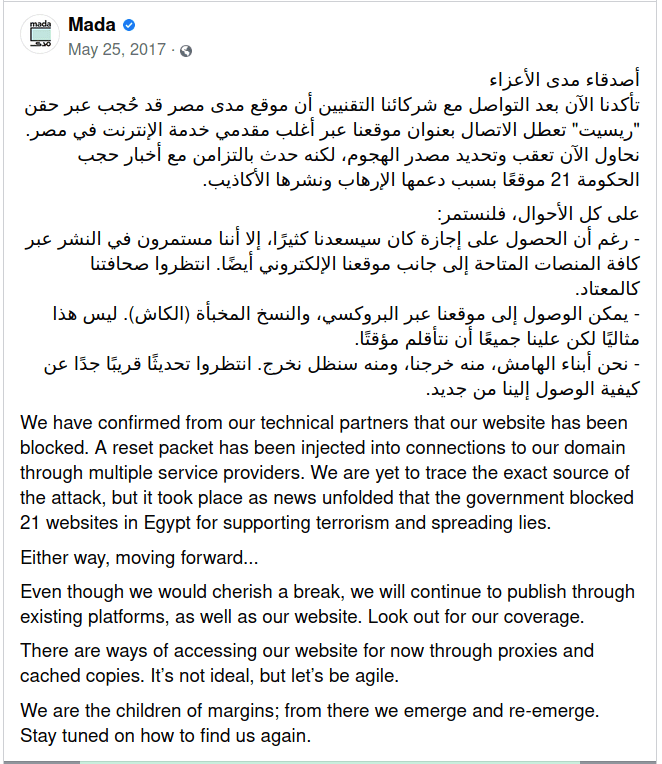
تعرض الموقع الصحفي المستقل “مدى مصر” للحجب في مصر في 24 مايو 2017، مع بداية استخدام السلطات المصرية لممارسة حجب مواقع الوِب، ونشر فريق عمل مدى مصر منشورًا على صفحتهم على فيسبوك ليؤكدوا تعرض الموقع للحجب، وجاء في المنشور: “تأكدنا الآن بعد التواصل مع شركائنا التقنيين أن موقع مدى مصر قد حُجب عبر حقن “ريسيت” تعطل الاتصال بعنوان موقعنا عبر أغلب مقدمي خدمة الإنترنت في مصر.” وَعَدَ مدى مصر قراءه بالاستمرار في نشر المحتوى الصحفي بالرغم من الحجب، فأكد المنشور على أنه: “رغم أن الحصول على إجازة كان سيسعدنا كثيرًا، فإننا مستمرون في النشر عبر كافة المنصات المتاحة إلى جانب موقعنا اﻹلكتروني أيضًا. انتظروا صحافتنا كالمعتاد“. بعد الحجب قام الموقع باستخدام روابط بديلة للوصول إلى جمهوره، تعرضت أغلبها للحجب على مدار السنوات الثلاث الماضية، حتى وصل عدد الروابط البديلة المحجوبة لموقع مدى مصر إلى أكثر من 25 رابطًا بديلًا بحسب رصد “مسار“. كما اعتمد القائمون على موقع مدى على خدمة صفحات الهواتف المحمولة المُسرَّعة (AMP) في بداية عام 2018 في محاولة أخرى لتخطي الحجب، ولكن تعرضت الخدمة بدورها للحجب في مصر في فبراير 2018.
On 24 May 2017, internet users were surprisingly faced by a blocking of 21 websites, among them Al-Jazeera, Rassd, the Qatari Al-Arab newspaper, Cairo Portal, and Mada Masr. Egypt’s Middle East News Agency reported “a high-level security source” on that day saying that 21 websites were blocked. The claim was that these websites published deliberate lies that support terrorism and extremism. However, the decision taker of the blocking was not announced by the “security source”. The next day, Al-Masri al-Youm newspaper published a report whose source comes from a sovereign state body that discusses other countries’ experiences in blocking websites. The aim was to justify website blocking in Egypt.
On 24 May 2017, the independent news website Mada Masr was blocked in Egypt. Mada Masr’s staff published a statement on Facebook confirming news of the blocking. The statement said: “we confirmed with our technical partners that our website has been blocked. A reset packet has been injected into connections to our domain through multiple service providers”. Mada Masr promised the reader to continue providing its services despite the blocking: “Even though we would cherish a break, we will continue to publish through existing platforms, as well as our website. Look out for our coverage”. After the blocking, the website used alternative links to reach its audience. All through the past three years, most of these alternative links were also blocked. The number of blocked alternative links reached more than 25 (according to Massar’s survey). In another attempt to overcome the blocking, Mada admins also used the AMP service early in 2018. However, the service itself was blocked in February 2018.
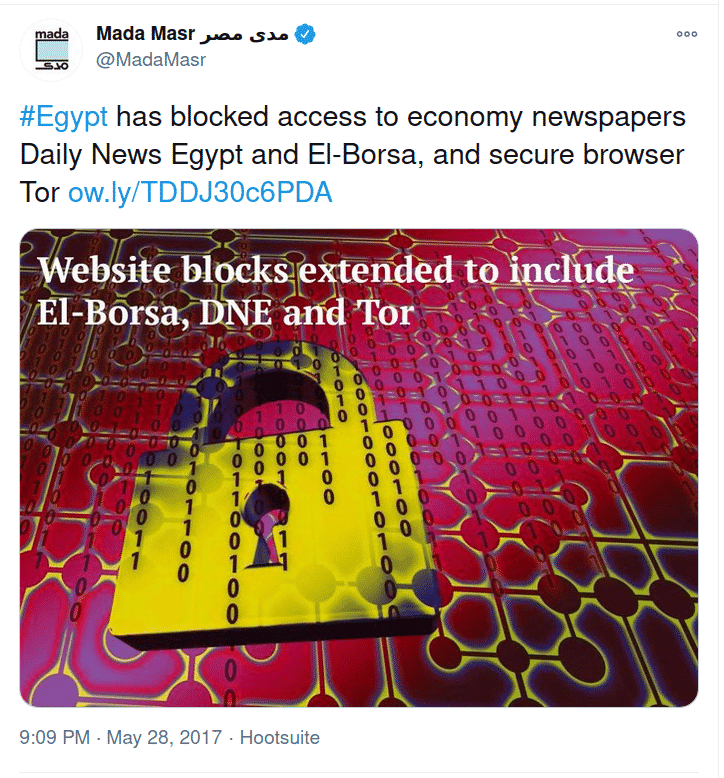
A few days after the blocking of websites, Tor browser and 8 other subdomains of Tor project were blocked. Tor was blocked after it was noticed that its users are increasing in number to overcome the governmental blocking policies. Tor is an open-source application administrated by volunteers. Its aim is to support the protection of privacy on the internet (it hides IP addresses and encrypts communications). The number of blocked websites had rose to 34 at the time Tor was blocked (Massar’s calculations).
On 16 June 2017, the independent news website Al-Manassa was blocked in Egypt. The website published the news: “Al-Manassa was blocked today morning inside Egypt, to be added to a list of more than 70 blocked websites in Egypt. Al-Manassa’s teamwork will continue their work challenging the blocking and will take all possible measures to keep providing their services”. The website used an alternative link to publish its content. This succeeded for nearly a year, then the website was blocked again on 29 March 2018. Al-Manassa explained this by saying it happened: “after our extended coverage of the presidential election, in which we documented a number of violations that included voter bribes and mobilization and forcing civil servants to cast their votes”. Then, on 9 April 2020, a new alternative link of Al-Manassa was blocked. The website published a statement on Facebook entitled “Why was it impossible to reach Al-Manassa website in the past days?”. It said: “the website and all of its alternative links were completely blocked”. It added: “Our journey with the blocking started three years ago since the first wave of the blocking in May and June 2017. This was followed by a number of blocking for different domains we used to provide our services to the reader. Al-Manassa vows to continue offering the reader balanced and professional journalism. We will knock all technical and legal doors to achieve this”.
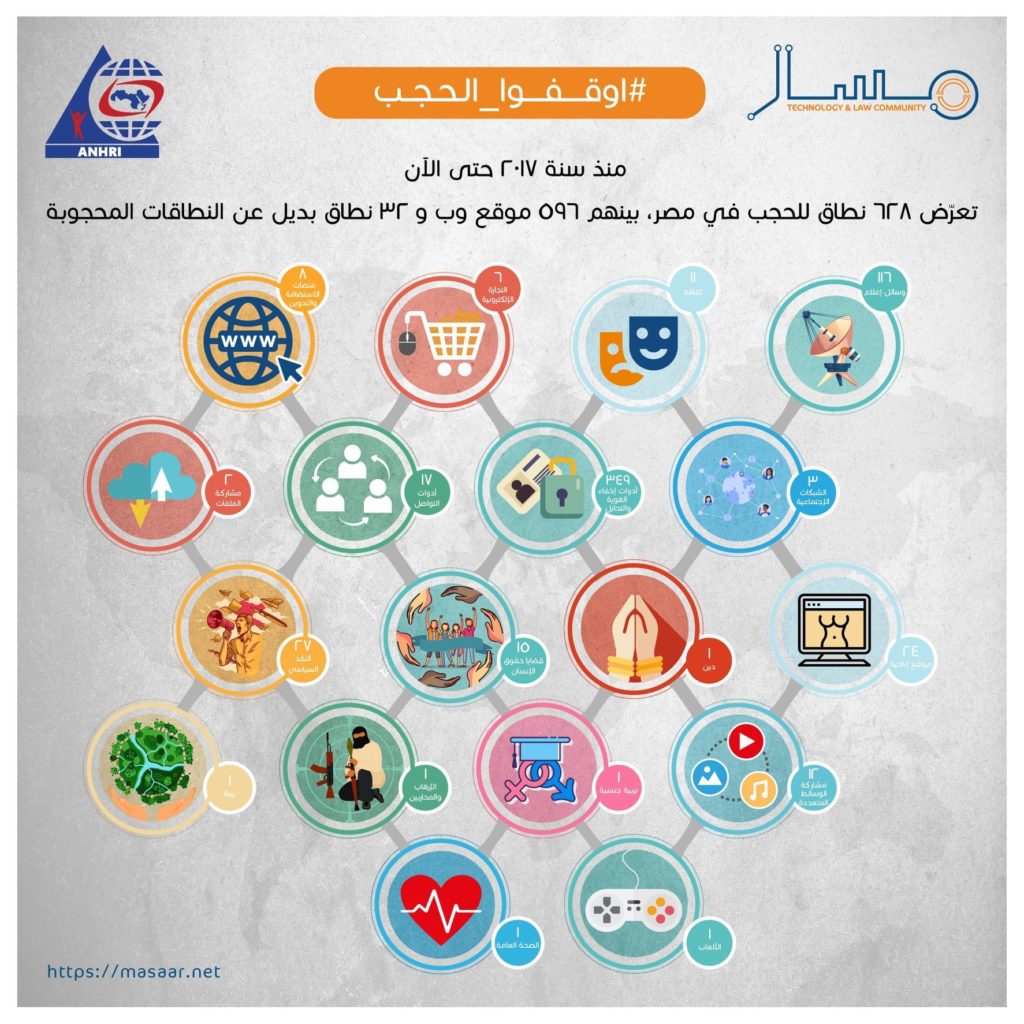
في محاولة لمنع المستخدمين من الوصول إلى المواقع المحجوبة، قامت السلطات المصرية بحجب عدد ضخم من المواقع التي تقدم خدمات تخطي الحجب، حيث تعرض ما يقرب من 250 موقعًا من مواقع الـVPN والبروكسي للحجب في يوم 30 أغسطس 2017، بينما إجمالي عدد المواقع التي تعرضت للحجب حتى هذا التاريخ كان قد ارتفع إلى 398 موقعًا بحسب رصد “مسار“. وعلى مدار السنين الماضية استمرت السلطات في حجب المواقع التي تقدم خدمة تخطي الحجب حتى وصل عدد مواقع الـVPN والبروكسي المحجوبة في مصر إلى 349 موقعًا حتى وقت نشر التقرير.
In an attempt to prevent users from reaching the blocked websites, the Egyptian authorities blocked a big number of VPN providers. 250 proxy and VPN websites were blocked on 30 August 2017. The total number of blocked websites hence reached 398 (Massar statistics). It should be noted here, that the authorities block on VPN providers continues until this very day, until the number of blockd proxy websites reached 349 (at the time of writing this report).
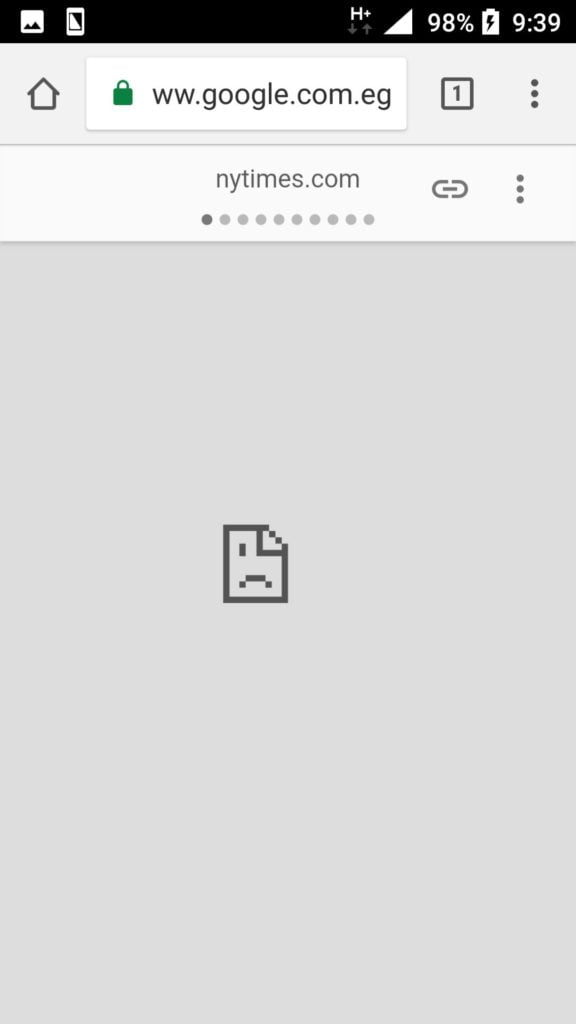
On 2 February 2018, the Egyptian authorities blocked the Accelerated Mobile Pages (AMP) service in Egypt, after some websites (Mada Masr included) used it to overcome the blocking. AMP is a service provided by Google that aims at improving the performance of webpages on smartphones. This is done by enabling web publishers to increase the upload speed of their pages. Many well-known websites depend on this service, and hence its ban blocked users from reaching millions of websites. It should be noted here that on the same day of the AMP blocking, AMP website was also blocked.
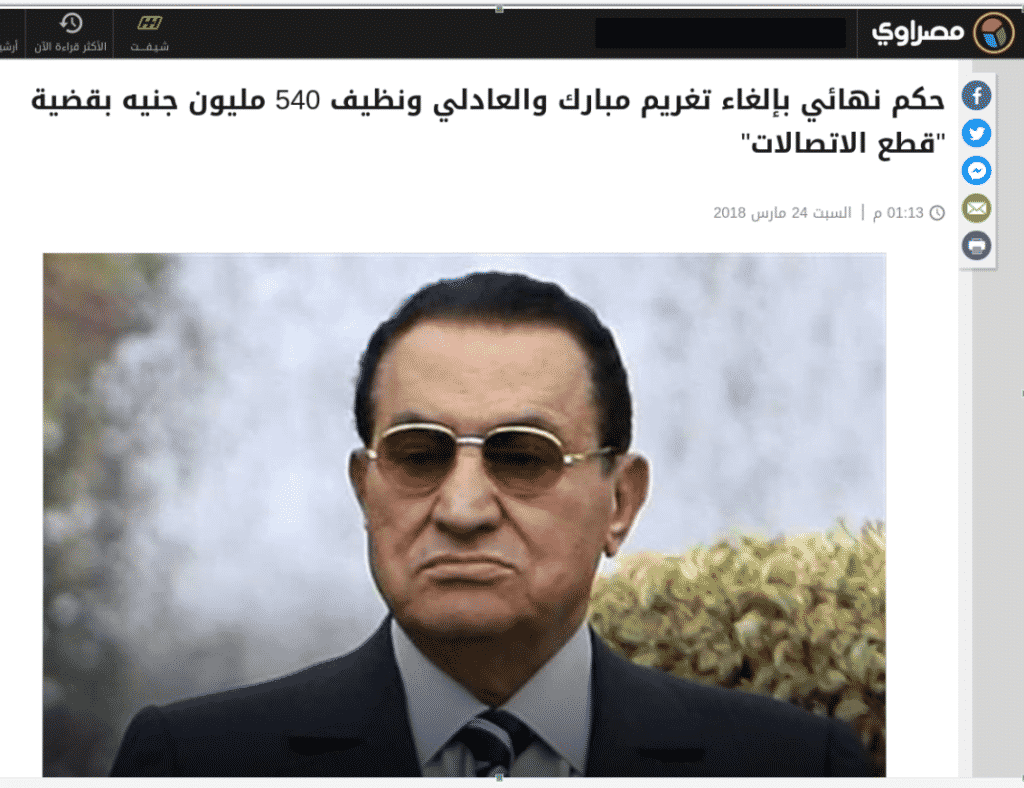
بعد سبع سنوات من الحكم بالغرامة في قضية قطع الاتصالات أثناء ثورة 25 يناير 2011، أصدرت المحكمة الإدارية العليا حكمًا نهائيًّا بإلغاء الحكم الصادر عن القضاء الإداري بتغريم الرئيس الأسبق حسني مبارك، ورئيس الوزراء الأسبق أحمد نظيف، ووزير الداخلية الأسبق حبيب العادلي 540 مليون جنيه مصري من أموالهم الشخصية كتعويض عن الأضرار التي خلفها قرارهم بقطع خدمات الإنترنت والاتصالات. حيث اعتبرت المحكمة أن قرار قطع الاتصالات “جاء حفاظًا على الأمن القومي للبلاد ومنعًا لوقوع أي جرائم إرهابية تزامنًا مع أحداث التظاهر التي كانت تشهدها البلاد في ذلك الحين“.
After the 2011 court ruling to impose a fine in the case known as “cutting off communications during the revolution”, the Supreme Administrative Court issued a final ruling annulling the fine on President Hosni Mubarak, PM Ahmed Nazif, and Interior Minister Habib al-Adli. The court said the decree to cut off communications “came to protect national security and prevent any terrorist crimes that might happen in conjunction with the protests that the country witnessed at that time”.
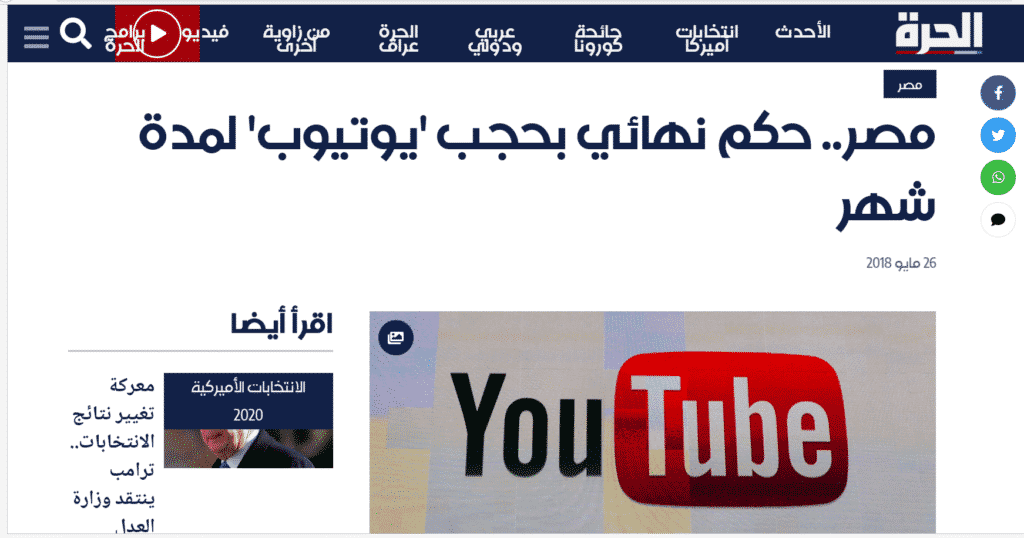
أصدرت المحكمة الإدارية العليا حكمًا نهائيًّا باتًّا في دعوى حجب “يوتيوب” في 26 مايو 2018، حيث قامت بتأييد حكم محكمة القضاء الإداري بحجب “يوتيوب” لمدة شهر. ورأت المحكمة أنه كان يتعين على الدولة “مُمَثلةً في الجهاز القومي لتنظيم الاتصالات أن تسارع بحجب هذا الفيلم المسيء فورًا من موقع اليوتيوب وكافة المواقع الإلكترونية، وإذا لم يكن هذا في استطاعتها كان عليها أن تقوم بحجب موقع اليوتيوب كاملًا وكل موقع يمكن من خلاله الوصول إلى هذا الفيلم المسيء لتحفظ الأمن والسلام الاجتماعي بين شعبها“.
On 26 May 2018, the Supreme Administrative Court issued a final ruling in the lawsuit requesting blocking YouTube. The Court approved the previous ruling to block the website for one month. The new ruling said: “the state, embodied in NATRA, should have hastened to block this insulting movie at once from YouTube and all the other websites. If this were impossible, the state should have blocked YouTube itself, and all means through which the movie could be reached, to preserve social security and peace among the Egyptian people”.
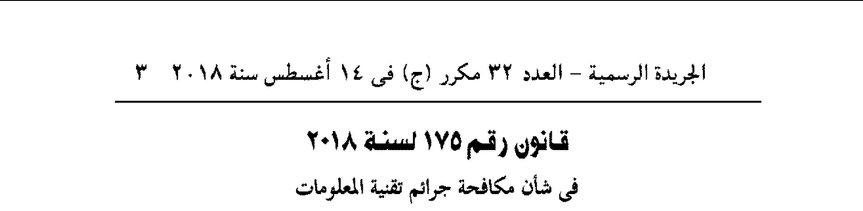
صدَّق الرئيس السيسي على قانون مكافحة جرائم تقنية المعلومات في 18 أغسطس 2018، وهو القانون المعروف إعلاميًّا بقانون مكافحة الجريمة الإلكترونية. يعطي القانون لجهات التحقيق سلطة حجب المواقع “متى قامت أدلة على قيام موقع يبث داخل الدولة أو خارجها، بوضع أي عبارات أو أرقام أو صور أو أفلام أو أية مواد دعائية، أو ما في حكمها مما يعد جريمة من الجرائم المنصوص عليها بالقانون، وتشكل تهديدًا للأمن القومي أو تعرِّض أمن البلاد أو اقتصادها القومي للخطر“. كما يلزم القانون مقدمي الخدمة “بحفظ وتخزين سجل النظام المعلوماتي أو أي وسيلة لتقنية المعلومات لمدة 180 يومًا متصلة“، ومن البيانات الواجب حفظها: “البيانات التى تمكِّن من التعرف على مستخدم الخدمة، البيانات المتعلقة بمحتوى ومضمون النظام المعلوماتي، والبيانات المتعلقة بحركة الاتصال“. وفي 27 أغسطس 2020، أصدر رئيس مجلس الوزارة اللائحة التنفيذية للقانون.
On 18 August 2018, President Abdel-Fattah al-Sisi ratified the anti-information technology crimes law (known in the media as the anti-cybercrime law). The law gives the investigations authorities the powers to block websites “if there were evidence that any website, administrated from inside or outside Egypt, publishes statements, numbers, photos, movies, or any propaganda material that are criminalized by this law and that represent a threat to national security or endanger the security or economy of the country”. The law commits service providers to “store the data log register for 180 continuous days”. Among the data that should be preserved: “data that show the identity of the service user, data pertaining to the content the data log register, data pertaining to tracking the path of communication”. On 27 August, the prime minister issued the executive regulations of the law.
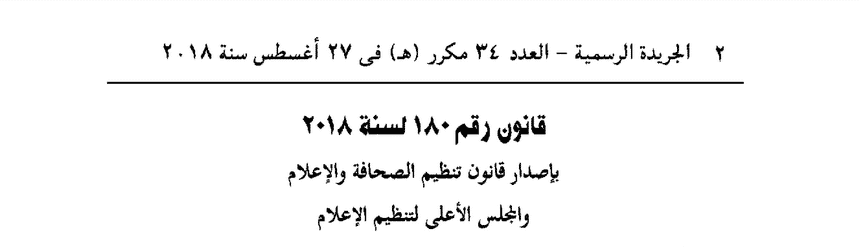
بعد أيام من التصديق على قانون مكافحة جرائم تقنية المعلومات، صدق الرئيس عبد الفتاح السيسي في 1 سبتمبر 2018 على قانون تنظيم الصحافة والإعلام والمجلس الأعلى لتنظيم الإعلام. أعطى القانون سلطة حجب المواقع الصحفية للمجلس الأعلى لتنظيم الإعلام في حالة عدم الحصول على ترخيص سارٍ من المجلس، كما يمكن للأعلى للإعلام، بموجب القانون، حجب أي موقع إلكتروني شخصي، أو مدونة إلكترونية شخصية، أو حساب إلكتروني شخصي يبلغ عدد متابعيه خمسة آلاف متابع أو أكثر إذا “نشر أو بث أخبارًا كاذبة، أو ما يدعو أو يحرِّض على مخالفة القانون أو إلى العنف أو الكراهية، أو ينطوي على تمييز بين المواطنين أو يدعو إلى العنصرية أو التعصب أو يتضمن طعنًا في أعراض الأفراد أو سبًّا أو قذفًا لهم أو امتهانًا للأديان السماوية أو للعقائد الدينية“. وفي 16 فبراير 2020، أصدر رئيس مجلس الوزارة اللائحة التنفيذية للقانون.
Days after passing of the anti-cybercrime law, President Abdel-Fattah al-Sisi ratified the press and media regulation law (this law also regulates the formation of the Supreme Council for Media Regulation). The law gives the Council the jurisdiction to block news websites in case they had no valid license. The Council can also block any personal website, blog, or electronic account whose followers are 5,000 persons or more “if it published or broadcast false news, incited violence, hatred and disobey to the law, or called for discrimination between citizens, or approves racism and called for fanaticism or insulted individuals or represented an insult to heavenly religions or religious dogmas”. On 16 February 2020, the prime minister issued the executive regulations of the law.

في بداية إبريل 2019 وبالتزامن مع فترة دعوة المصريين للاستفتاء على التعديلات الدستورية، بدأت حملة “باطل” في مصر، وهي حملة استهدفت جمع توقيعات من مواطنين ضد التعديلات الدستورية، بعد يوم واحد فقط من إطلاق الحملة، تعرض موقع “باطل” للحجب في مصر، أطلقت الحملة رابطًا جديدًا لجمع التوقيعات لكنه تعرض بدوره للحجب هو وكل رابط جديد، ففي خلال 12 يومًا تعرضت 9 روابط لحملة باطل للحجب في مصر. أثناء محاولة الحكومة حجب روابط حملة باطل، تعرض ما يزيد على 26 ألف موقع في مصر للحجب فقط لاشتراكهم مع موقع باطل في عنوان الآي بي.
On 1 April 2019, and parallel to the constitutional amendments referendum, a campaign with the name ‘Batel’ (meaning void or invalid) was launched. The campaign aimed at collecting signatures from citizens against the constitutional amendments. After just one day Batel’s website was blocked. The campaign provided an alternative link, but it was also blocked (all the alternative links provided afterwards were blocked). In 12 days, 9 links were blocked in Egypt. And because of this ‘link hunt’, more than 26 thousand websites were blocked in Egypt, as they shared the same IP with Batel.
تلت مظاهرات 20 سبتمبر دعوات للتظاهر مرة أخرى في 27 سبتمبر 2019، وبالرغم من أن الدعوة للتظاهر لم تلقَ اهتمامًا شديدًا، فإن الحكومة المصرية أمضت الأسبوع كله في محاولات لحجب تطبيقات التراسل الفوري وحجب المواقع الصحفية. في 22 سبتمبر حاولت الحكومة المصرية حجب تطبيق واير للتراسل الفوري على شبكة فودافون، وفي اليوم التالي حاولت الحكومة حجب “فيسبوك ماسنجر” على شبكات الإنترنت المحمول حيث ظهر للعديد من المستخدمين رسائل تفيد بأن “فيسبوك ماسنجر” غير متاح حاليًّا أو في انتظار الشبكة، كما أن موقع “فيسبوك ماسنجر” تعرض أيضًا للحجب لفترة محدودة، كما تعرض 14 موقعًا من مواقع تطبيقات التراسل الفوري للحجب في تلك الفترة، وفي 24 سبتمبر حاولت الحكومة حجب تويتر وفي بعض الأحيان خنق الاتصال بالموقع، وفي نفس اليوم رصد تقنيون وجود حجب جغرافي لتويتر وفيسبوك في منطقة وسط المدينة بالقاهرة على شبكات الإنترنت المحمول المختلفة.