Tech and Law
Court of Cassation Rules Against Expansive Use of Website Blocking Regulations
. This paper examines how the judiciary has approached blocking as an exceptional measure that directly affects freedom of expression and access to information, and it traces the legislative context that enabled the expansion of blocking practices, from national security cases to disputes involving intellectual property and unfair competition.
Read MoreNew Judicial Trend: Criminal Court Overturns Conviction Due to Invalidity of Digital Forensic Evidence
In a new judicial development, the Shebin El-Kom Criminal Court overturned a conviction against a defendant in a cyber extortion case conducted via the “WhatsApp” application, after it was proven that the digital forensic evidence used against him was invalid due to the authorities’ failure to comply with the legal and technical standards governing its collection and analysis. This paper examines the court’s reasoning in detail.
Read MoreModern Work Patterns in the New Labor Law: Between Legislative Recognition and Implementation Challenges
This paper provides a critical analysis of how platform workers are positioned within the new Labor Law, highlighting shortcomings that may leave them vulnerable. It also presents practical proposals to bridge these gaps, ensuring the protection of workers’ fundamental rights in the context of an accelerating digital economy.
Read MoreRethinking Cybercrime: New Crimes or New Technologies for Old Crimes?

This paper seeks to engage with the ongoing debate surrounding the concept of ‘cybercrime’. It presents arguments in favor of establishing a distinct classification termed “cybercrime”, as well as the counterarguments asserting that crime, in its essence, remains constant, with technology serving merely as a new instrument for the commission of traditional offenses.
Read MorePowers and Oversight in the Digital Space: The Crime of Operating a Website without a License and the Authority of the Supreme Council for Media Regulation
The crime of “operating a website without a license” presents a set of complex legal and constitutional challenges in Egypt. Since the introduction of the Press and Media Regulation Law, the licensing requirement has been increasingly applied to a broad range of websites, often extending beyond the explicit scope defined by the law and the Constitution. This paper offers a critical legal analysis of this expanding regulatory framework.
Read MoreFirst Judicial Application of the Personal Data Protection Law: A Reading of a Compensation Ruling Against Orange
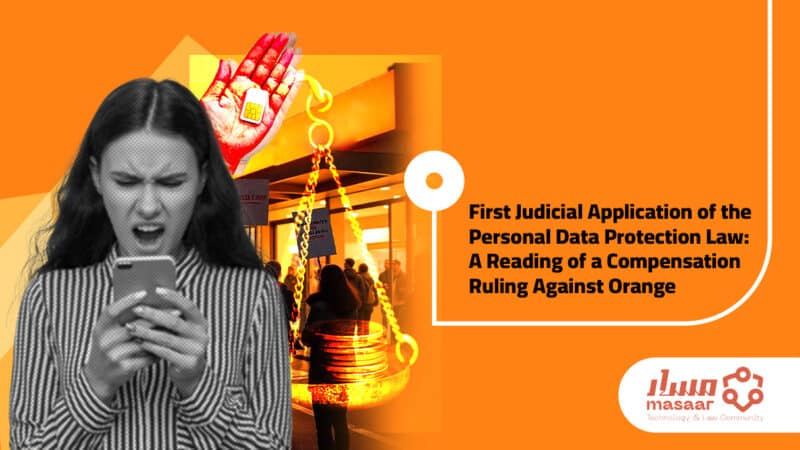
This paper analyzes the reasoning behind a compensation judgment issued against Orange under the Personal Data Protection Law. It also examines the new judicial principles established by the court regarding telecommunications companies’ responsibilities in safeguarding customer data.
Read MoreCriminal Justice in the Digital Age: How Technology Is Reshaping the Landscape of Justice
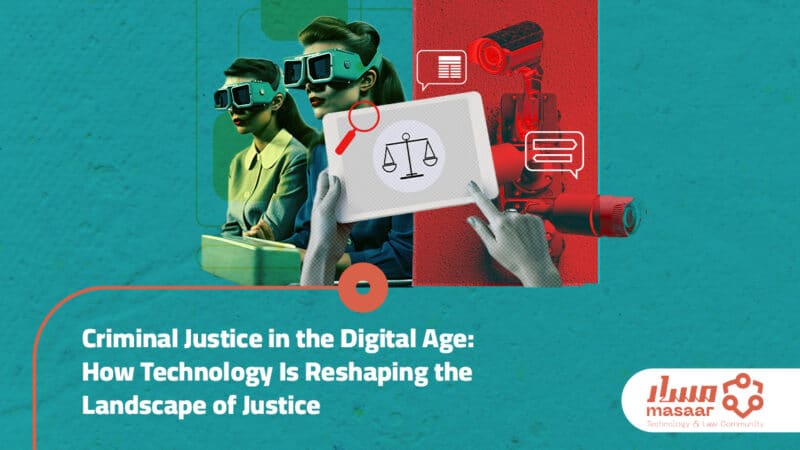
This paper explores the concept of criminal justice in the digital context and how it differs from the traditional framework. It also analyzes the impact of digital technology on all phases of criminal proceedings, including pre-investigation, investigation, trial, and sentencing.
Read MoreThe Opportunities and Challenges in Using Strategic Litigation to Defend Digital Rights
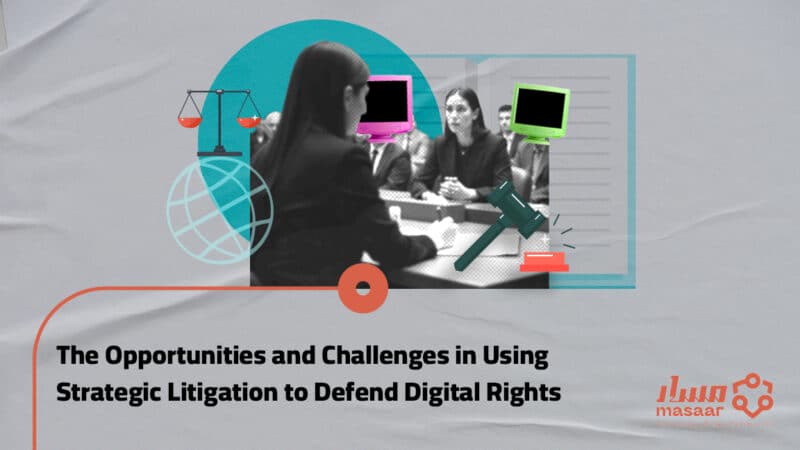
This paper discusses how strategic litigation can be used in digital rights cases. It explores the concept and forms of strategic litigation, the opportunities it offers, as well as the challenges that hinder its use. The paper also presents local and international experiences in employing strategic litigation within the context of digital rights.
Read MoreA Study on the Principle of Prohibiting Custodial Sentences in Publication Offenses
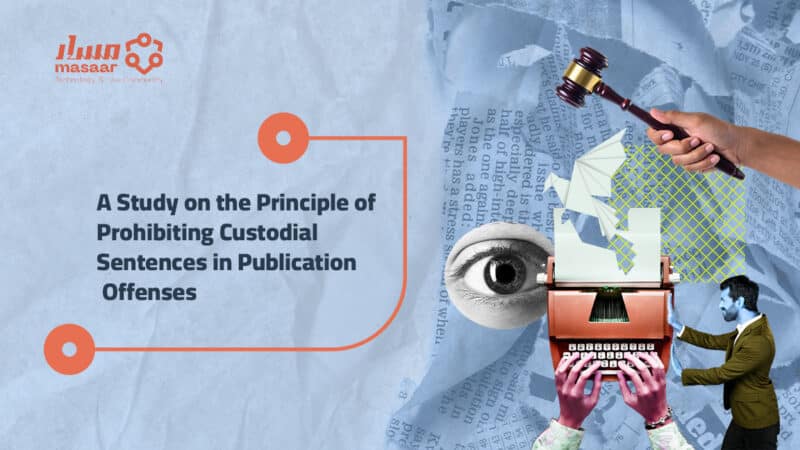
This paper examines the Egyptian criminal courts’ disregard for the constitutional principle prohibiting custodial sentences for publication offenses. It analyzes three court rulings where custodial sentences were imposed despite this principle.
Read More